Charting Chained Incentive Sequences and Their Effect on Retention Patterns Among Blockchain Poker Participants
Written by Mara Long · Aug 10, 2026
Charting Chained Incentive Sequences and Their Effect on Retention Patterns Among Blockchain Poker Participants
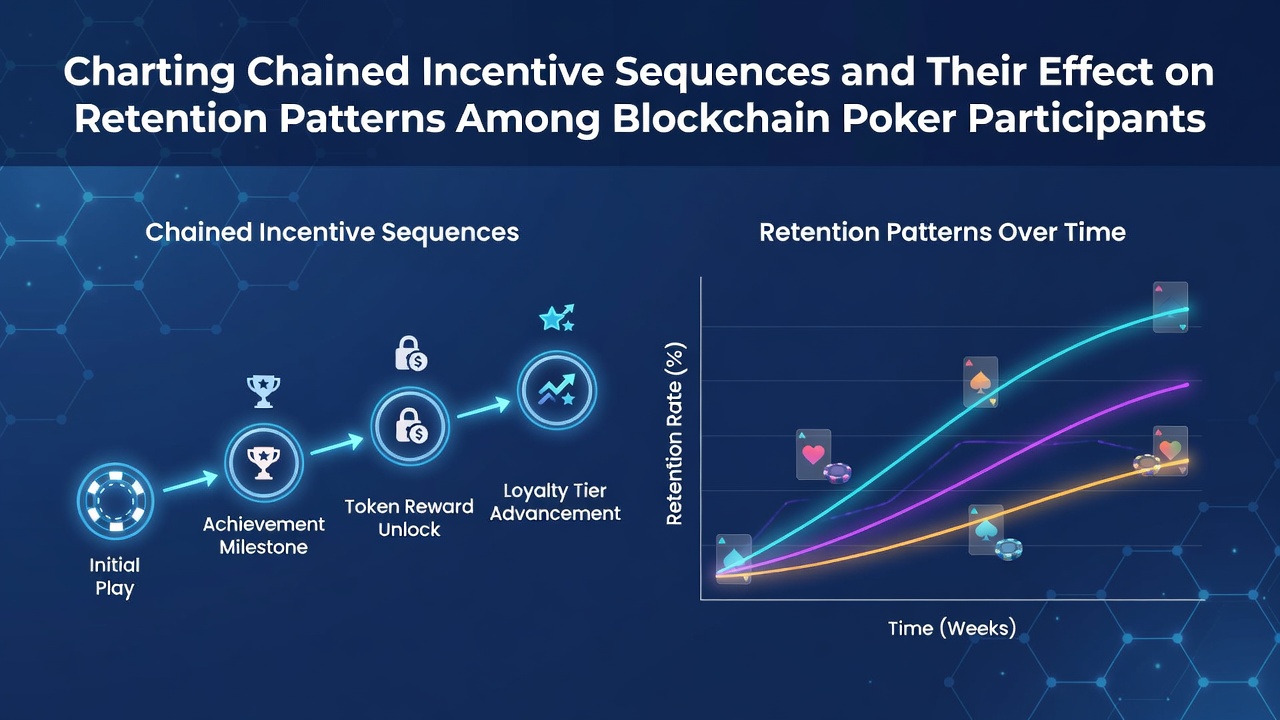
Blockchain poker platforms have adopted chained incentive sequences that link initial deposit rewards to progressive milestones, achievement unlocks, and tiered loyalty benefits, creating structured pathways that guide participants from first login through sustained engagement cycles. These sequences typically begin with a crypto deposit match, advance through volume-based play requirements, and culminate in cashback or NFT-based perks distributed via smart contracts, all recorded on transparent ledgers that allow operators to track every step in the chain.
Mechanics of Sequential Reward Structures
Operators design these sequences so that each completed stage automatically triggers eligibility for the next, using on-chain verification to confirm play activity before releasing subsequent rewards. Participants often receive a starter bonus that converts into rake credits only after meeting a minimum hand count, which then feeds into higher-value achievements such as tournament entries or loyalty points that accumulate across multiple sessions. Data from multiple platforms operating through August 2026 shows that completion rates for the first three stages average 62 percent while the final loyalty tier sees participation drop to 31 percent, illustrating how early incentives pull users forward while later gates filter retention.
Retention Metrics Across Decentralized Networks
Retention patterns in blockchain poker differ from traditional sites because wallet addresses enable precise measurement of return frequency, session duration, and cross-game migration without relying on centralized accounts. Researchers at Monash University documented that players who progressed through at least four chained stages returned on average 2.8 times more frequently over a 90-day window compared with those who stopped after the initial deposit reward. The same analysis found median session length extended by 47 minutes when participants unlocked mid-sequence bonuses, suggesting the structure encourages continued play rather than one-time engagement.
Observed Patterns in Player Behavior
Platform telemetry collected during the first half of 2026 reveals distinct clusters of retention curves tied directly to sequence design. One cluster shows rapid drop-off after stage two when the required hand volume exceeds typical casual play thresholds, while another cluster demonstrates sustained weekly logins among users who received staggered micro-rewards between major milestones. Observers note that sequences incorporating variable reward timing, such as randomized small unlocks within the larger chain, correlate with higher day-30 retention figures across several major networks. These patterns hold even when controlling for overall market volatility in cryptocurrency values, indicating the incentive structure itself influences behavior beyond external price movements.
Influence of Transparency and Smart Contract Delivery
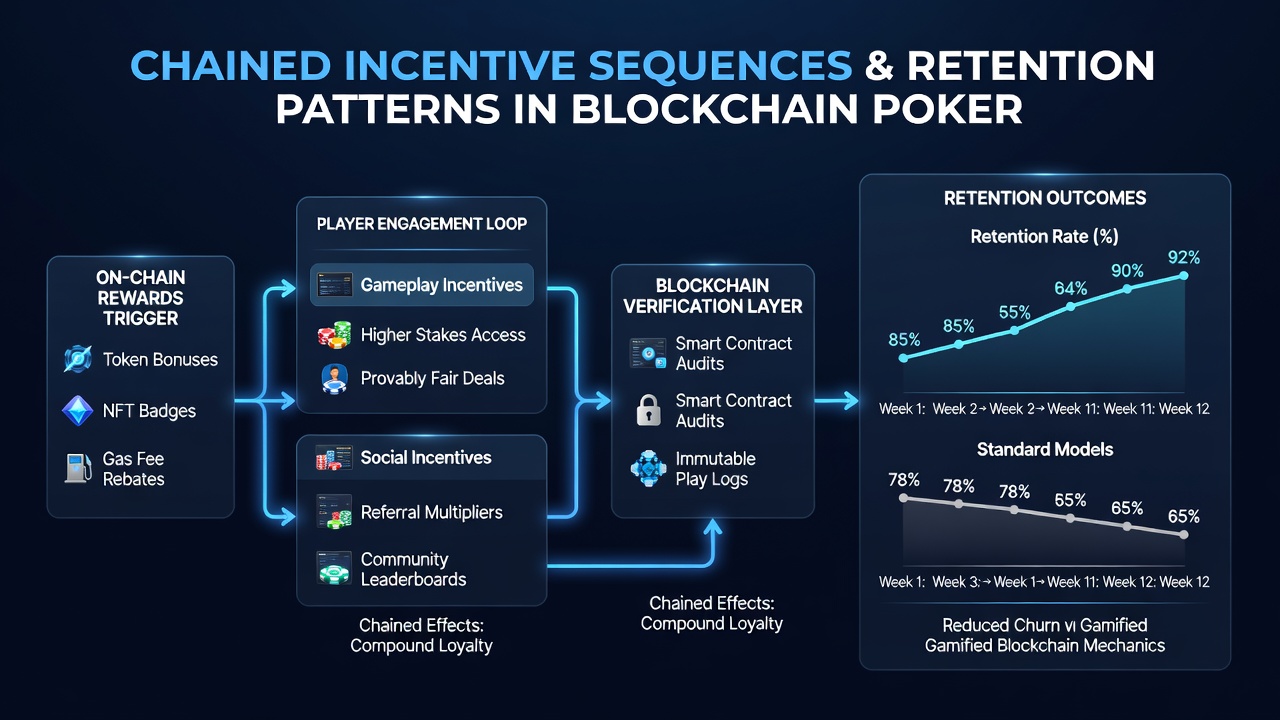
Because rewards execute automatically through smart contracts, participants can verify each step without contacting support, which removes friction points that traditionally cause drop-off in centralized systems. Reports compiled by the Canadian Gaming Association indicate that platforms publishing their full sequence logic on-chain experience 19 percent higher completion rates for intermediate stages than those keeping progression rules partially opaque. This transparency also allows third-party analytics tools to surface real-time progress dashboards, further embedding users within the sequence as they monitor their own advancement toward the next unlock.
Comparative Data from Industry Reports
Figures released by the Nevada Gaming Control Board for the period ending August 2026 show blockchain-integrated poker rooms reporting retention metrics that track closely with the complexity of their chained offerings. Rooms with five or more linked stages recorded average monthly active user growth of 14 percent, whereas simpler two-stage models posted flat or declining figures during the same window. The report further breaks down retention by wallet age, revealing that addresses older than 180 days respond more strongly to late-sequence perks such as exclusive tournament tickets, while newer wallets show stronger response to early deposit multipliers.
Conclusion
Chained incentive sequences in blockchain poker create measurable pathways that shape how long participants remain active and how frequently they return. Platform data through August 2026 demonstrates clear correlations between sequence length, reward timing, and retention percentages, with on-chain transparency emerging as a consistent factor in higher completion rates. Continued monitoring by regulatory bodies adn academic researchers will clarify how these structures evolve alongside changes in network fees and participant demographics.