Mapping Pathways from Initial Login Incentives through Layered Achievement Milestones to Sustained Participation Perks in Cryptocurrency-Enabled Virtual Gaming Hubs
Written by Mara Long · Jun 1, 2026
Mapping Pathways from Initial Login Incentives through Layered Achievement Milestones to Sustained Participation Perks in Cryptocurrency-Enabled Virtual Gaming Hubs
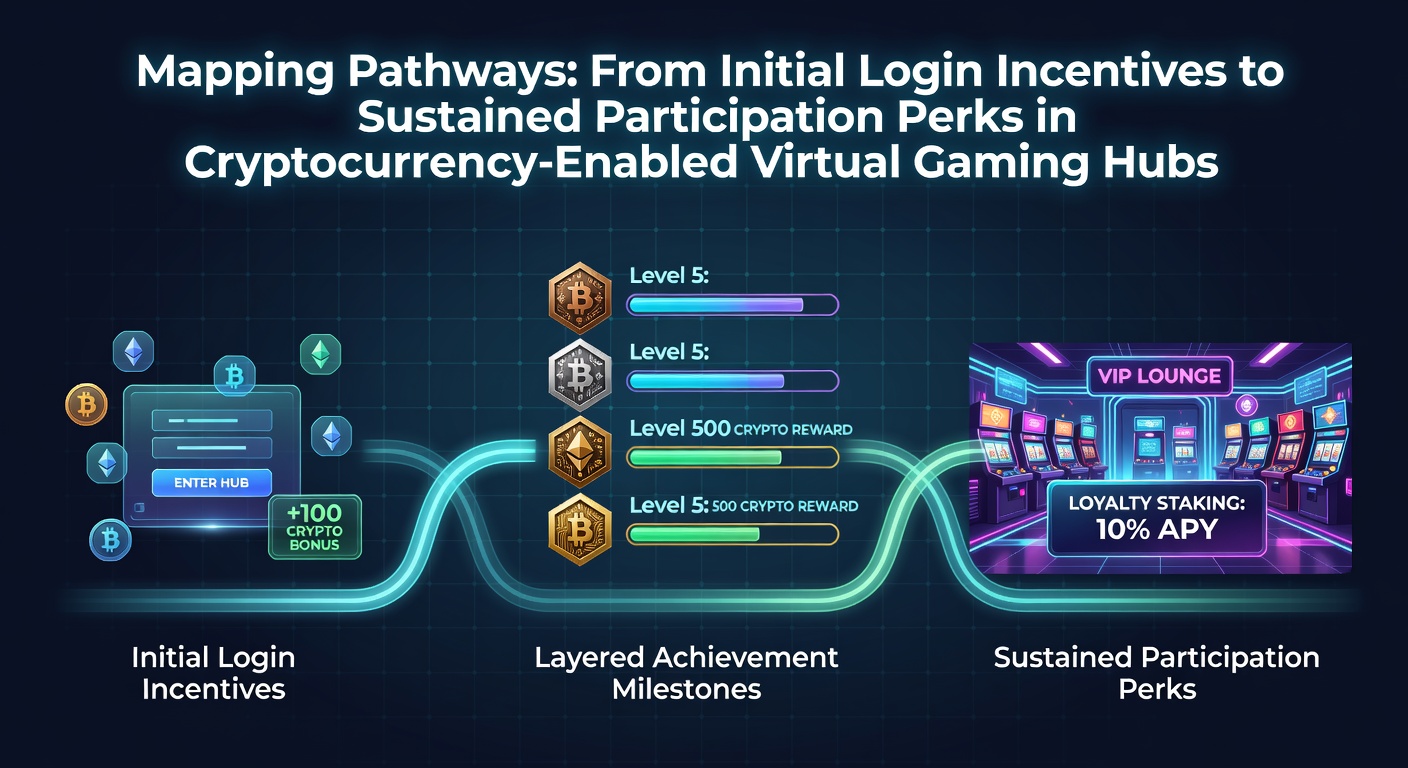
Observers note that cryptocurrency-enabled virtual gaming hubs operate through structured progression systems where participants move from entry-level rewards to more complex participation structures. These systems often begin with simple login incentives that encourage initial platform access, then expand into achievement-based layers before reaching ongoing perks tied to continued activity. Initial login incentives typically include small cryptocurrency distributions or token credits awarded upon account creation and first connection. Data from multiple platforms active in early 2026 shows these rewards function as entry points that introduce users to wallet integration and basic transaction mechanics without requiring prior deposits. Platforms distribute these through automated smart contracts that verify wallet addresses and release tokens directly into player accounts.Building Through Achievement Layers
Once participants complete the entry phase, systems shift toward layered achievement milestones that track specific in-game actions. These milestones commonly involve completing tutorial sequences, participating in introductory matches, or accumulating minimum playtime hours. Each layer unlocks incremental token amounts or non-fungible asset fragments that hold value within the platform's internal economy.
Research indicates these milestones follow sequential patterns where early tasks focus on learning platform controls while later ones require coordinated play with other users. As of June 2026, several hubs reported that players who completed at least five milestone stages showed higher rates of wallet retention compared to those who stopped after initial rewards.
Transition to Sustained Participation Perks
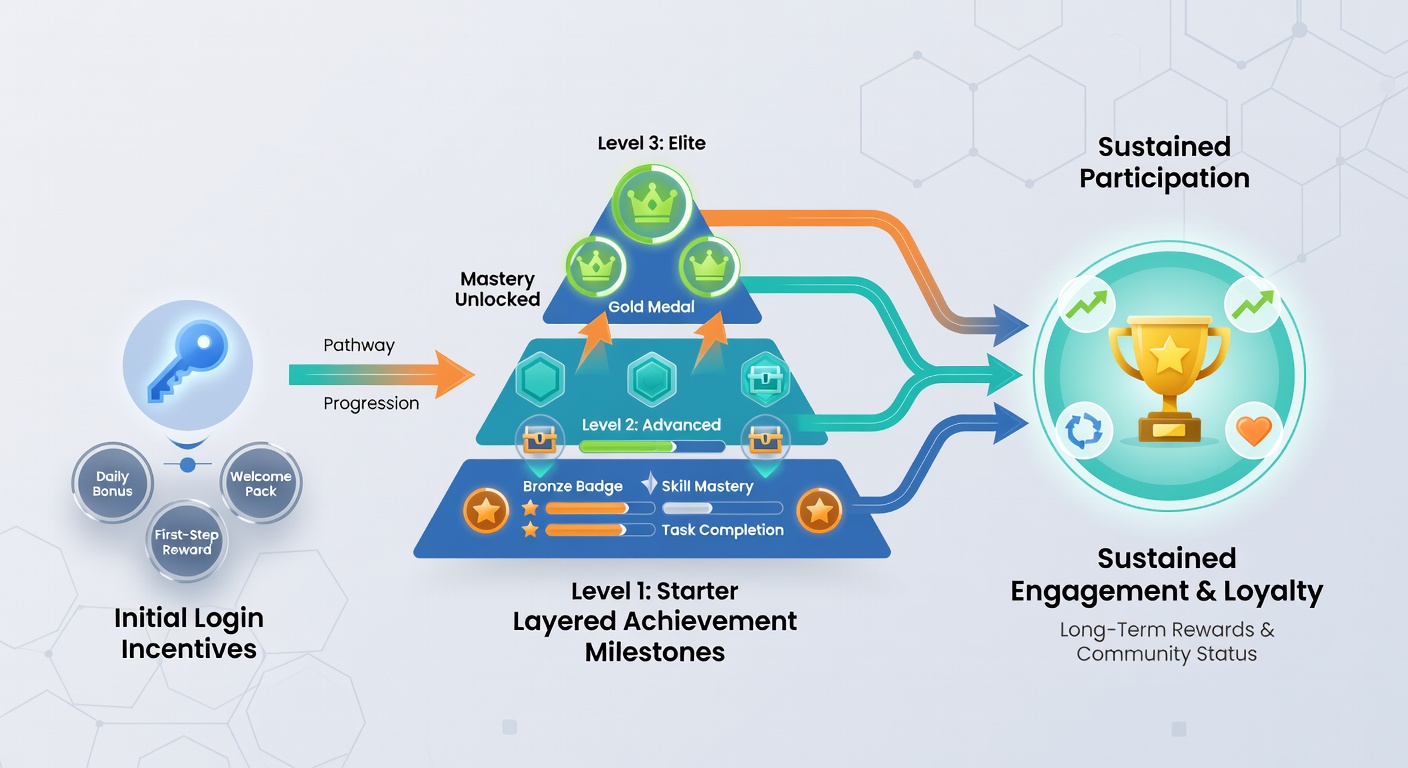
After milestone completion, pathways lead into sustained participation perks that reward regular engagement over extended periods. These perks often include reduced transaction fees, access to exclusive virtual zones, or periodic token vesting schedules tied to login frequency. The structure creates continuity between one-time achievements and recurring benefits.
According to Canadian Gaming Research reports, platforms using these models recorded measurable increases in monthly active wallets when sustained perks activated after the third achievement layer. The transition points matter because they convert short-term exploration into longer-term economic participation within the hub.
Technical Integration of Crypto Mechanics
Cryptocurrency integration appears at each stage through transparent ledger tracking. Login incentives arrive as direct token transfers, achievement milestones update smart contract states, and sustained perks execute through automated distribution rules. This setup allows participants to monitor progress via on-chain data while maintaining control over their digital assets.
Those who've studied these systems observe that wallet connectivity remains consistent across stages, eliminating the need for repeated external transactions. Instead, internal balances adjust automatically based on verified activity logs stored on distributed networks.
Examples Across Platform Types
Take one researcher who tracked progression patterns across multiple virtual hubs during the first half of 2026. The analysis showed that platforms combining all three stages retained participants longer than those offering only login rewards. Another case revealed that achievement layers incorporating social components, such as team-based challenges, accelerated movement toward sustained perks.
What's interesting is how these pathways adapt across different virtual environments. Some hubs emphasize competitive rankings within milestones, while others focus on creative building tasks that unlock equivalent rewards. The underlying structure stays similar even when surface activities vary.
Conclusion
The mapping of these pathways demonstrates how cryptocurrency-enabled virtual gaming hubs organize participation through sequential stages. Initial login incentives draw users in, layered achievements build engagement depth, and sustained perks maintain ongoing involvement. Data from industry tracking shows these connected systems operate across multiple platforms, with variations depending on specific game mechanics and token economics. As networks continue updating their protocols through June 2026 and beyond, the progression structures remain central to how participants interact with these digital spaces.