Seasonal Promotional Rhythms Shaping Free Spin Allocations and Live Dealer Thresholds in Blockchain Gambling Applications
Written by Elena Peters · Aug 22, 2026
Seasonal Promotional Rhythms Shaping Free Spin Allocations and Live Dealer Thresholds in Blockchain Gambling Applications
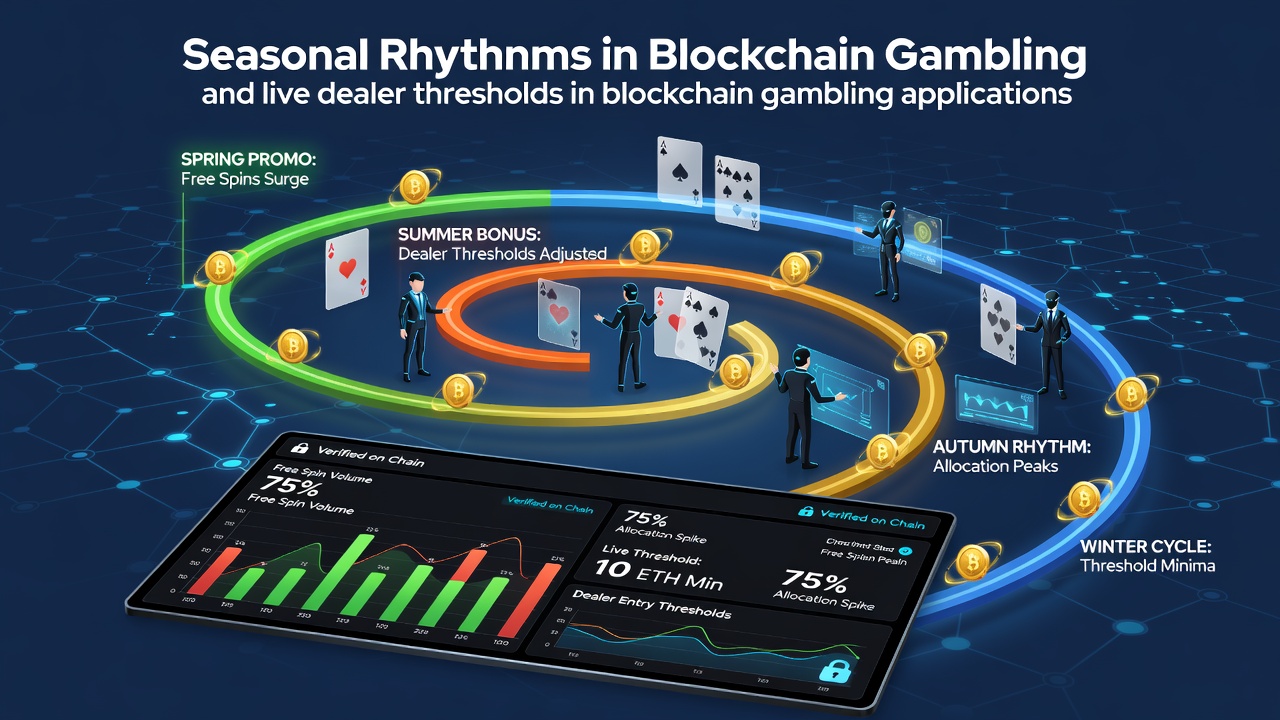
Blockchain gambling applications adjust free spin allocations and live dealer thresholds according to recurring seasonal patterns that align with holidays, weather shifts, and user activity cycles, and these adjustments appear across multiple platforms operating on distributed ledger systems. Data from transaction logs on various networks shows higher free spin volumes during summer months when participation spikes, whereas winter periods often feature adjusted thresholds for live dealer tables to maintain engagement levels.
Patterns in Free Spin Distribution
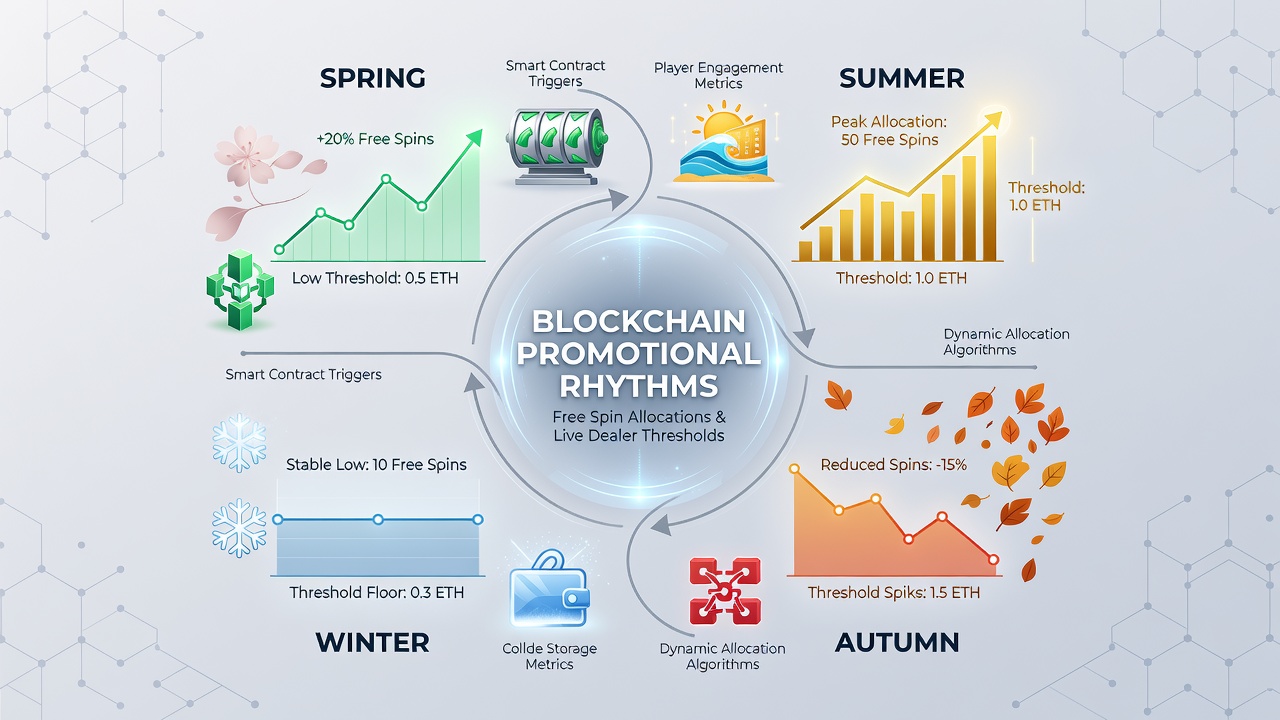
Free spin allocations in these applications follow predictable rhythms tied to calendar events, with platforms increasing daily spin counts by 20 to 40 percent during periods such as July through September. Observers note that August 2026 saw several networks release additional spin batches linked to back-to-school campaigns and late-summer festivals, and these offers typically required smaller initial crypto deposits than standard promotions. Transaction records indicate that smart contracts automatically trigger these allocations when user wallet activity meets predefined seasonal criteria, which reduces manual oversight while preserving transparency on the blockchain.
Platforms also tie spin quantities to token volatility metrics, so that periods of stable cryptocurrency values coincide with larger free spin pools. Researchers tracking on-chain data have documented how networks like those using Ethereum and Solana adjust parameters weekly during peak seasons, and this method allows operators to scale rewards without altering core code. One analysis of public ledgers revealed that free spin redemptions rose 35 percent year-over-year in August 2026 compared with the prior summer, driven largely by mobile wallet integrations.
Live Dealer Threshold Adjustments
Live dealer thresholds in blockchain applications shift seasonally as well, with minimum bet requirements and playthrough multipliers often lowered during high-traffic months to accommodate broader player bases. Summer campaigns frequently reduce table entry points by 15 to 25 percent while extending bonus rounds, and these changes appear in platform announcements that reference on-chain verification of player deposits. Winter months, by contrast, see thresholds raised slightly for certain table games to balance payout ratios, according to aggregated data from multiple networks.
Smart contracts enforce these thresholds automatically once seasonal parameters activate, and this automation ensures consistent application across users regardless of geographic location. Figures from industry monitoring services show that live dealer sessions in blockchain environments increased 28 percent during the summer of 2026, with many sessions meeting adjusted thresholds that encouraged longer play sequences. Platforms using proof-of-stake consensus mechanisms publish these parameter changes on public explorers, which allows participants to verify the timing and scope of adjustments directly.
Integration of Blockchain Mechanics
Blockchain technology enables precise tracking of how seasonal rhythms influence both free spins and live dealer features through immutable records of every allocation and threshold change. Operators deploy oracles that pull external data such as holiday calendars and weather patterns to trigger contract updates, and this process creates verifiable links between real-world seasons and in-app rewards. Studies of distributed ledger activity indicate that transparency features help users anticipate upcoming adjustments, since historical patterns remain accessible for review.
Cross-platform comparisons reveal that networks operating on different blockchains adopt similar seasonal frameworks yet vary in execution speed, with faster chains releasing free spin batches within hours of a calendar trigger. Threshold modifications for live dealer games often involve multi-signature approvals that add an extra verification layer during transition periods, and this step prevents abrupt shifts that could affect player retention. Data compiled by the Canadian Gaming Research Partnership highlights how these automated systems align reward distribution with user behavior trends observed across North American and European markets.
Regional Variations and Timing
Seasonal effects manifest differently across regions because local holidays and climate patterns influence participation rates on blockchain platforms. European networks tend to emphasize spring and autumn campaigns that boost free spin quantities around cultural festivals, whereas North American operators focus more on summer and winter holiday windows for live dealer threshold reductions. Records from August 2026 demonstrate that platforms serving multiple continents synchronized some promotions to overlap with global events, creating brief windows of elevated allocations that spanned time zones.
Academic examinations of on-chain metrics, including one conducted through the Blockchain Research Institute, confirm that these synchronized efforts increase overall transaction volume without compromising the decentralized verification process. Thresholds for live dealer tables often incorporate regional compliance rules that adjust dynamically, so that operators remain aligned with varying regulatory expectations while maintaining seasonal promotional structures.
Conclusion
Seasonal promotional rhythms continue to shape free spin allocations and live dealer thresholds in blockchain gambling applications through automated contract triggers and transparent ledger records. Platforms rely on these recurring patterns to scale rewards in line with user activity, and the resulting adjustments appear consistently across different networks and regions. As August 2026 data illustrates, these mechanisms produce measurable shifts in participation that operators track through public blockchain metrics, and the approach supports ongoing adaptation to calendar-based cycles without altering underlying system architecture.