Tracing Demographic Influences on Reward Redemption Rates in Global Digital Casino Networks
Written by Erik Keller · Jul 18, 2026
Tracing Demographic Influences on Reward Redemption Rates in Global Digital Casino Networks
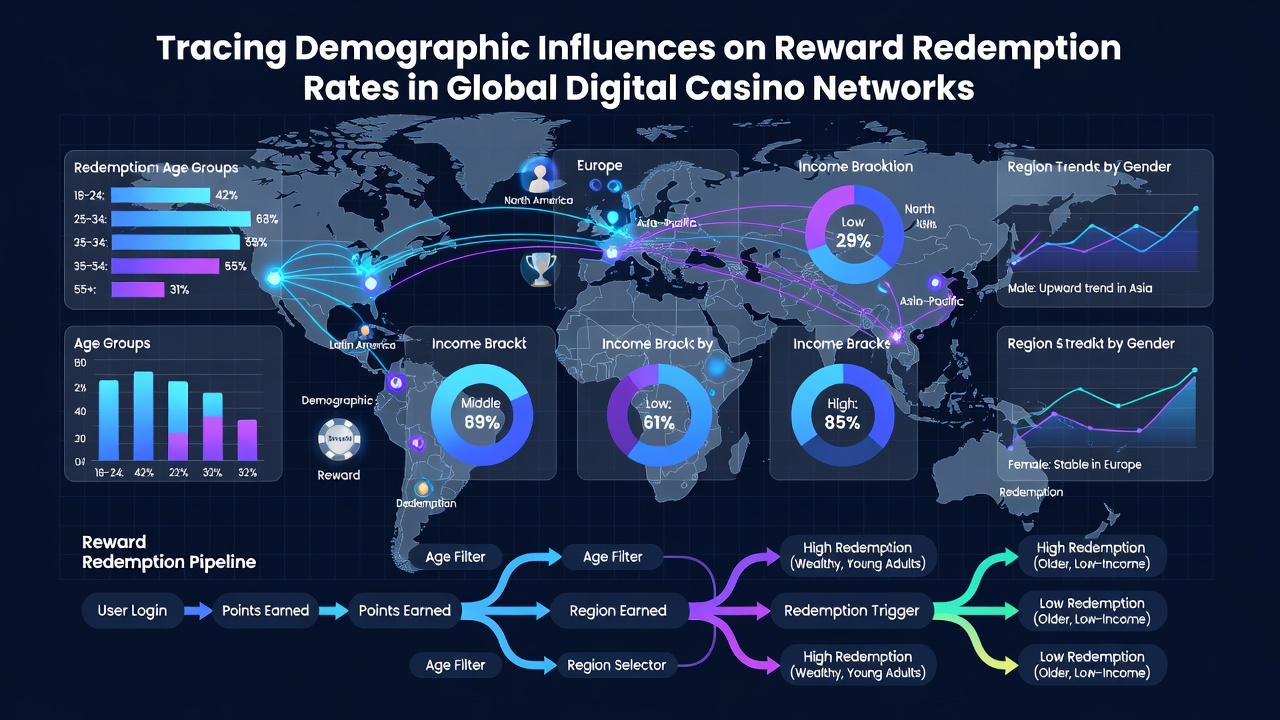
Digital casino platforms track reward redemption rates through layered analytics that connect user profiles with behavioral data, and patterns emerge when researchers examine these figures by age, location, income brackets, and other variables. Studies from multiple jurisdictions indicate that younger cohorts between 18 and 34 tend to redeem promotional credits at higher frequencies than older groups, while those over 55 often convert rewards into longer session play rather than immediate cashouts.
Age-Based Variations in Redemption Behavior
Data collected across North American and European networks shows that players aged 25 to 34 complete redemption sequences for free spins and deposit matches within the first 48 hours at rates approximately 18 percent higher than those aged 45 and above. This difference appears because younger users integrate mobile notifications and app-based wallets into daily routines, whereas older participants often wait for scheduled payout windows. Researchers at academic centers tracking blockchain-enabled sites note that millennials and Gen Z users also explore tiered loyalty structures more aggressively, converting points into merchandise or tournament entries at consistent intervals.
Geographic and Regional Patterns
Networks operating in Canada and Australia report distinct redemption curves tied to local regulations and payment infrastructure. In provinces where iGaming expanded in 2023, users from urban centers redeem bonus funds into live dealer tables at twice the rate of rural players, a trend linked to faster internet speeds and greater access to real-time support. Australian operators, working under state commissions, document that participants from New South Wales convert crypto-based rewards into cashback programs more readily than those in Queensland, where traditional banking rails still dominate transaction volumes. These regional splits become visible in aggregated dashboards that filter activity by IP origin and currency preference.
Gender and Socioeconomic Influences
Platform operators segment redemption statistics by self-reported gender and spending history, revealing that female players across several networks redeem personalized cashback offers at steadier intervals throughout the month, while male users cluster redemptions around major sporting events or slot tournaments. Income indicators derived from deposit patterns further refine these observations. Higher-frequency depositors above certain thresholds convert VIP perks into physical experiences such as event tickets at elevated rates, whereas lower-spend segments prioritize in-game credits that extend playtime. Observers tracking these flows note that payment method choice correlates with socioeconomic signals, as e-wallet adopters complete redemptions faster than those using card or bank transfers.
Impact of Payment Technologies and July 2026 Trends
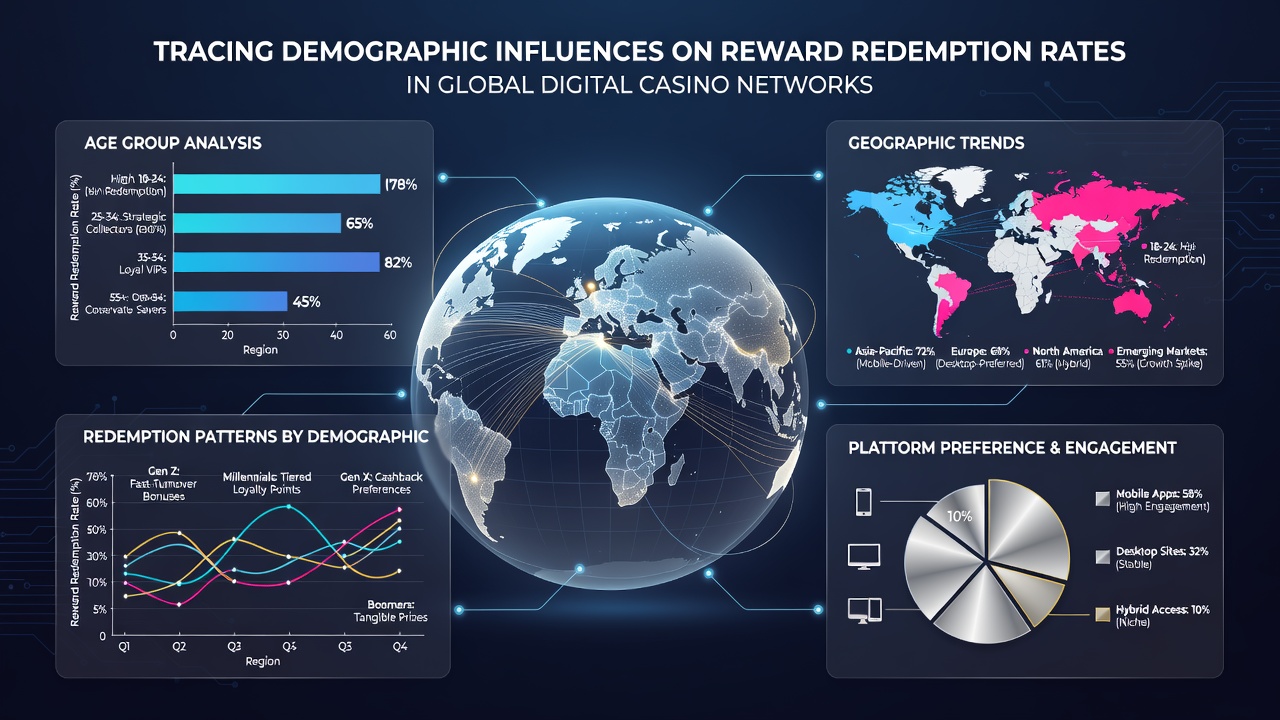
By July 2026, several global networks had integrated instant stablecoin settlements, and early figures indicate that users under 30 adopted these rails at rates exceeding 40 percent, leading to redemption completion times dropping below six hours in many cases. Older demographics continued to favor established card processors, which added verification steps and extended average processing windows to 24–72 hours. Industry reports compiled by the Nevada Gaming Control Board and the Victorian Commission for Gambling and Liquor Regulation highlight how these technological preferences intersect with demographic variables to shape overall redemption velocity across platforms.
One study released through the International Center for Gaming Regulation at the University of Nevada examined six months of anonymized transaction logs and found that geographic mobility, measured by frequent changes in login locations, predicted higher redemption diversity among users who split time between desktop and mobile environments. The same analysis showed that participants who linked social accounts redeemed achievement milestones at elevated volumes, suggesting that visibility and sharing features influence how rewards move from earned to utilized states.
Conclusion
Demographic segmentation of reward redemption data continues to provide operators with measurable signals that guide platform design and promotional scheduling. Networks that align redemption interfaces with age-specific habits, regional payment norms, and socioeconomic profiles record more consistent conversion activity across their user bases. As digital casino ecosystems expand, ongoing collection of these segmented metrics supports refined approaches to loyalty structures and payout mechanics worldwide.